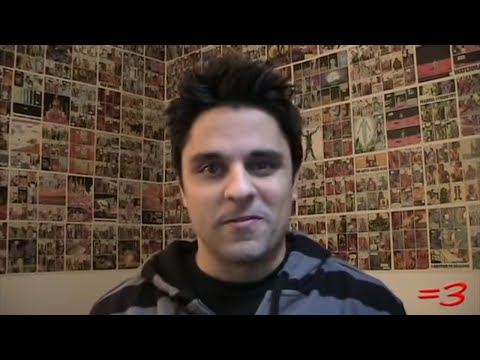
Psycho Asian Girlfriend
Maybe, you want to have a girlfriend like her? =)
 Video
Maybe, you want to have a girlfriend like her? =)
Video
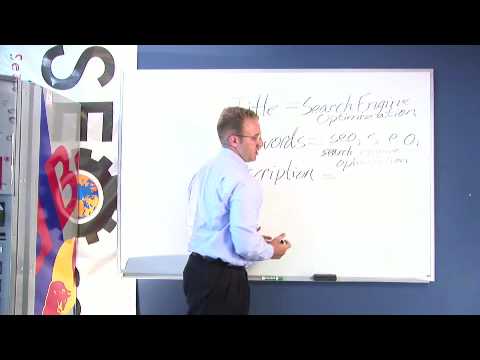
Now for organic search engine optimization, we are going to cover Meta Tag Authoring. For Meta Tag Authoring, you’re going to have 3 major sections – your title, your keyword, and your description. Now, you are going to want to spend time writing each and you will want to keep them very concise and focused on the theme of the actual page itself. Now when we’re looking at the title, I am going to back to the Search Engine Optimization example so, for title, I am going to use the keyword “Search Engine Optimization.” Everybody has their own style of SEO, but I prefer to use 3 to 5 keywords per page assignment. So, when I’m going to assign words that have to do search engine optimization, I am going to use the keyword SEO, all lower case, and I am actually going to use SEO with spaces in between in it just in case somebody types a period (.) or spaces, and I am going to assign the keyword search engine optimization. Now I’m writing my keywords, I’m keeping everything lower case because a lot of people most commonly type in words on the search engine in lower case and the search engine actually reflects how somebody is searching to the words it’s actually going to match-up with, in a keyword base. So, you wanna make sure keep your characters in all lower case. You want there to be a logical pattern between your title, your keywords, and your description. So, you are going to actually assign a description which is going to be the description that the search engine is going to list below your website, most likely, unless it actually pulls content from your page, right below the listing of the website itself. So you’ll want to write something that has keywords in it and say, “Search Engine Optimization, commonly known as SEO, allows you to list on the search engines”. Now what we did here with the description is we hit upon a few specific keywords, so that we’re not placing too many keywords in the Meta tags, but you can see the actual logical pattern going from your title into your keywords and then from keywords into description. As you can see, the word SEO appearing in your keyword assignment reflects down to SEO in your description. Then you have the keyword, Search Engine Optimization here in your description, linking to the keyword with-in your Meta tag. You can see there is an actual logical pattern going from your title, your keywords, and then into your description. If you want to actually assign numbers to it or letters to help you organize it, you can say (1) is SEO (2) search engine optimization. Play with it however you like. Like I said, everybody has their own SEO techniques.
 Video
So we are going to take www.website.com/blog. Now on this blog page the reason that it’s relevant to the search engines is that all blog information will have Date and Time assignment. Now when a search engines identifies a blog on a website it points to it as a relevant area to come for updated information that has a date and time assigned to itself. Now when you are looking at a blog you can also place content on the blog that’s relevant to information on your website itself or websites offsite. Either way you’ll want to take your blog and do content optimization and internal linking. For example- If I have a blog which speaks to www.DefeatingDiabetes.com and I published an article in particular about “Type 1 Diabetes” I am going to actually want to take my keyword here “Type 1 Diabetes” and assign it to a page particular to this topic that you have here. Now, you have time stamped content that points right back into your website about the topic “Type 1 Diabetes” which brings relevant information that is updated, to the search engine index.
 Video
Sometimes, making videos with hundreds of cuts gets old. So, here's a video with just 2 cuts.
 Video
Agnetha Fältskog -The Heat Is On
 Video
Made entirely of short T2 sound effects. It'll be another 12 years until James Cameron makes another movie, so enjoy this.
 Video
http://www.siampedia.org newest release!
 Video
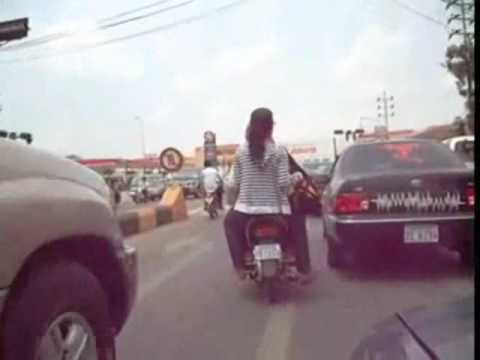
Cambodias traffic density peaks in the capital, to get an idea watch our videoclip. camera: Melona stuntdriver: Frank cut & edit: Thomas a HINIGUGMA media production for http://www.SIAMPEDIA.org
 Video
Süße, witzige Bilder von Katzen mit dem Song: Bananphone :-)
 Video
Ein paar Typen haben ein neues Hobby, sie schießen mit einer Scheekanone auf ihre Freunde!
 Video
The kid in the car has a toy gun out of his reach and asked people to pick it up for him. The "police" I guess were trasferring money or something. And when they saw the gun, they were on the ground indicating they don't want to be shot...hence Chicken Cops.
 Video
something like that happens if one goes with black ice and gets out then still of the car =)
 Video
A little Present for a little Angel. Happy Birthday Leontina =)
 Video
ein recht schnelles bike...................
 Video
You probably know these two as the couple with an ongoing prank feud
 Video
A brief overview of images from Micah Albert from Africa and the Middle East surrounding issues of food security, global food crisis, and hunger. The common denominator or the dozen nations shown, is that every person shown makes no more than $2 a day. Born and raised in California, photojournalist Micah Albert (b. 1979) studied and earned his B.A. in photography and graphic arts from Point Loma Nazarene University, Keller Visual Arts Center. Micah is an independent photojournalist and writer represented internationally by Redux Pictures, who has documented and brought attention to major world issues in Sudan, DR Congo, Syria, Yemen, Chad, Central African Republic, Saudi Arabia, Somalia, Kenya and many others. His regular clients include, The New York Times, Newsweek, BBC World, Christian Science Monitor, The Washington Times, World Policy Journal, The Sacramento Bee, British Airways, Business Week, Runner’s World, Lonely Planet, The North Face, The World Food Programme, UNFPA, UNICEF, UNHCR, among others. He has spent the last five years focusing on human rights, the global food crisis, refugee’s, the internally displaced and issues of migration, gender-based violence, public health and insecurity. His work has also earned several awards including his coverage of the post-election unrest in Kenya’s Rift Valley. micahalbert.com micahalbert.com/blog/
 Video
hehehe echt witzige werbung........
 Video
A crowd gives this kid the greatest day of his life, but he's going to be crushed when he finds out he's not some kind of wizard or king.
 Video
Latest collection of Arab Bedouin Jewish necklaces from Yemen. Made with silver, metal and precious coral amber and silver beads.
 Video
Bedouin jewelry and Arabic jewelry is the most beautiful designs. Here is a collection of handmade silver earrings from Yemen.
 Video
Found something worth sharing? Post a link, choose a clear title and join the conversation.
Share a video or link →Your account →Forgot your password?Found a video, picture or story? Add its link.
You can review the title and description in the next step.From the last 21 days. Metrics show these finds’ lifetime totals.
 Video01KnowledgeDeutschlands verbotene InselSimplicissimus
 Video02KnowledgeCan Dems actually fix the affordability crisis?Vox
 Video03EXAMENES FINALES con VEGETTA Y FARGAN! | Finals Week #2Willyrex
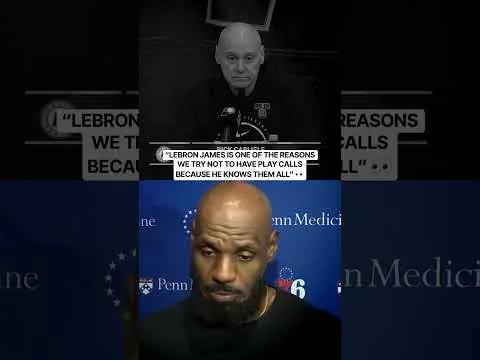 Video04Rick Carlisle talks about LeBron James knowing every team’s playsNBA
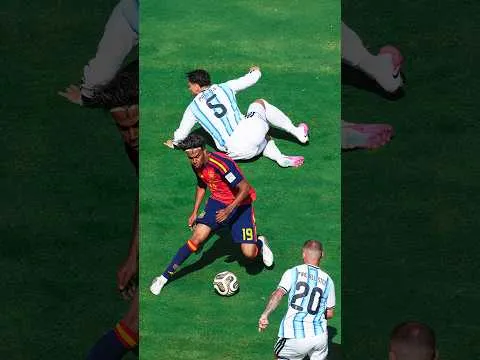 Video05Lamine Yamal ✨FIFA
DISCOVERY · HIGHLIGHTS
Published since 01.11.2026 · Metrics show these posts’ lifetime totals.
New finds and reactions. Each post appears only once.
VideoNewly sharedCan Dems actually fix the affordability crisis?VoxVideoNewly sharedEXAMENES FINALES con VEGETTA Y FARGAN! | Finals Week #2WillyrexVideoNewly sharedRick Carlisle talks about LeBron James knowing every team’s playsNBAVideoNewly sharedLamine Yamal ✨FIFA VideoNewly sharedVaidehi's Graceful Dance! | India's Best Dancer S5 | Dance To Win | Sign up for Sony LIV on YouTubeSET India